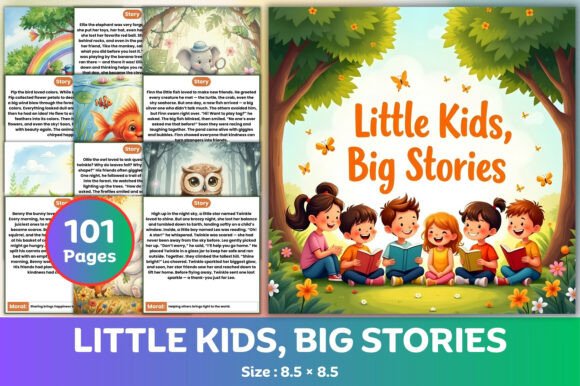
Little Kids, Big Stories: A Unique Approach to Early Childhood Reading
For parents and educators seeking engaging and educational content for young readers, Little Kids, Big Stories stands out as a compelling option. This collection of 50 original short stories is designed specifically for toddlers, preschoolers, and early readers, offering a blend of imagination, moral lessons, and fun. Unlike many other children’s books that focus solely on entertainment or basic literacy skills, Little Kids, Big Stories takes a more holistic approach by integrating values such as kindness, courage, and creativity into each narrative.
What Makes Little Kids, Big Stories Different?
One of the most distinctive aspects of Little Kids, Big Stories is its use of animal characters to convey meaningful messages. These stories feature adorable creatures embarking on magical adventures, which not only captivate young readers but also serve as vehicles for teaching important life lessons. The gentle tone and relatable scenarios make it easy for children to connect with the characters and understand the underlying morals.
Additionally, the book is structured to be versatile in its use. It can be enjoyed during bedtime reading, used in classroom settings, or incorporated into homeschooling curricula. This flexibility makes it an ideal resource for a wide range of learning environments. The stories are carefully crafted to be simple enough for beginning readers while still providing enough depth to engage older children.
Comparing Little Kids, Big Stories to Other Children’s Books
When evaluating children’s books, it’s essential to consider how they compare to similar options in terms of content, format, and educational value. Many popular children’s books focus on either pure entertainment or direct educational content, often at the expense of one or the other. Little Kids, Big Stories strikes a balance by combining both elements seamlessly.
For example, books like The Very Hungry Caterpillar or Where the Wild Things Are are known for their imaginative storytelling and artistic appeal, but they may not always include explicit moral lessons. In contrast, Little Kids, Big Stories ensures that each story carries a clear message about kindness, friendship, or self-belief, making it a valuable tool for character development.
Another key difference lies in the format and accessibility of the book. Little Kids, Big Stories is available in multiple formats, including PDF, PNG, and JPG, which allows for easy printing and customization. This is particularly beneficial for educators who may need to create personalized materials or for parents who want to print copies for their children. Compared to some other children’s books that are limited to physical copies, this flexibility enhances the book’s utility and reach.
Strengths and Limitations of Little Kids, Big Stories
Little Kids, Big Stories excels in its ability to inspire imagination and foster emotional growth in young readers. The stories are not only entertaining but also encourage critical thinking and empathy. By presenting challenges that the animal characters overcome, the book helps children develop problem-solving skills and resilience.
However, there are certain limitations to consider. While the book is well-suited for younger audiences, it may not offer the same level of complexity or depth as books aimed at older children or teenagers. Additionally, since the stories are all relatively short, they may not be sufficient for long-term reading sessions or deep literary analysis. For these reasons, Little Kids, Big Stories is best suited for occasional reading or as part of a broader reading program.
When Is Little Kids, Big Stories the Right Choice?
Little Kids, Big Stories is an excellent choice for parents and educators looking for a resource that combines fun with educational value. It is particularly well-suited for bedtime reading due to its calming tone and engaging narratives. The book also works well in classroom settings, where teachers can use the stories to spark discussions about kindness, creativity, and personal growth.
Moreover, the book’s availability in multiple formats makes it a great option for those who prefer digital resources or need printed materials for distribution. Whether you’re preparing for a school project, creating a reading list, or simply looking for a way to encourage your child’s love of reading, Little Kids, Big Stories offers a versatile and effective solution.
Alternatives to Consider
While Little Kids, Big Stories is a strong contender in the world of children’s literature, there are other options worth considering depending on specific needs and preferences. For instance, if you’re looking for a more interactive experience, books that include activities or games might be a better fit. Similarly, if you’re interested in a more advanced reading level, there are numerous books tailored for older children that offer more complex themes and language.
It’s also worth noting that some children’s books focus on specific subjects, such as science or history, which could be more appropriate for certain educational goals. However, Little Kids, Big Stories remains a standout option for those seeking a general-purpose book that promotes both literacy and emotional intelligence.
Conclusion
In conclusion, Little Kids, Big Stories is a thoughtful and well-designed collection of short stories that effectively combines imagination, moral lessons, and educational value. Its unique approach to storytelling, combined with its versatility in format and application, makes it a valuable resource for parents, educators, and young readers alike. While it may not be the perfect fit for every situation, it certainly offers a compelling alternative to traditional children’s books and is worth considering for those looking to inspire a love of reading in young children.